
2026 General Election: Governor Candidates on Civil Rights and Civil Liberties

The future of civil liberties and civil rights in New Mexico is on the ballot this year.

We sent a five-question questionnaire to candidates for Governor in New Mexico in 2026. So far, we've received responses from two candidates. Here's what they had to say on the most pressing civil rights and civil liberties issues facing New Mexicans from the New Mexico Civil Rights act to strengthen privacy protections for New Mexicans.

The candidates below appear in the order as they are expected to appear on the ballot.


Will you support policies requiring online companies to get consent before they collect, sell or share personal information and that the request for consent is done in a way that is very clear to all age groups? 
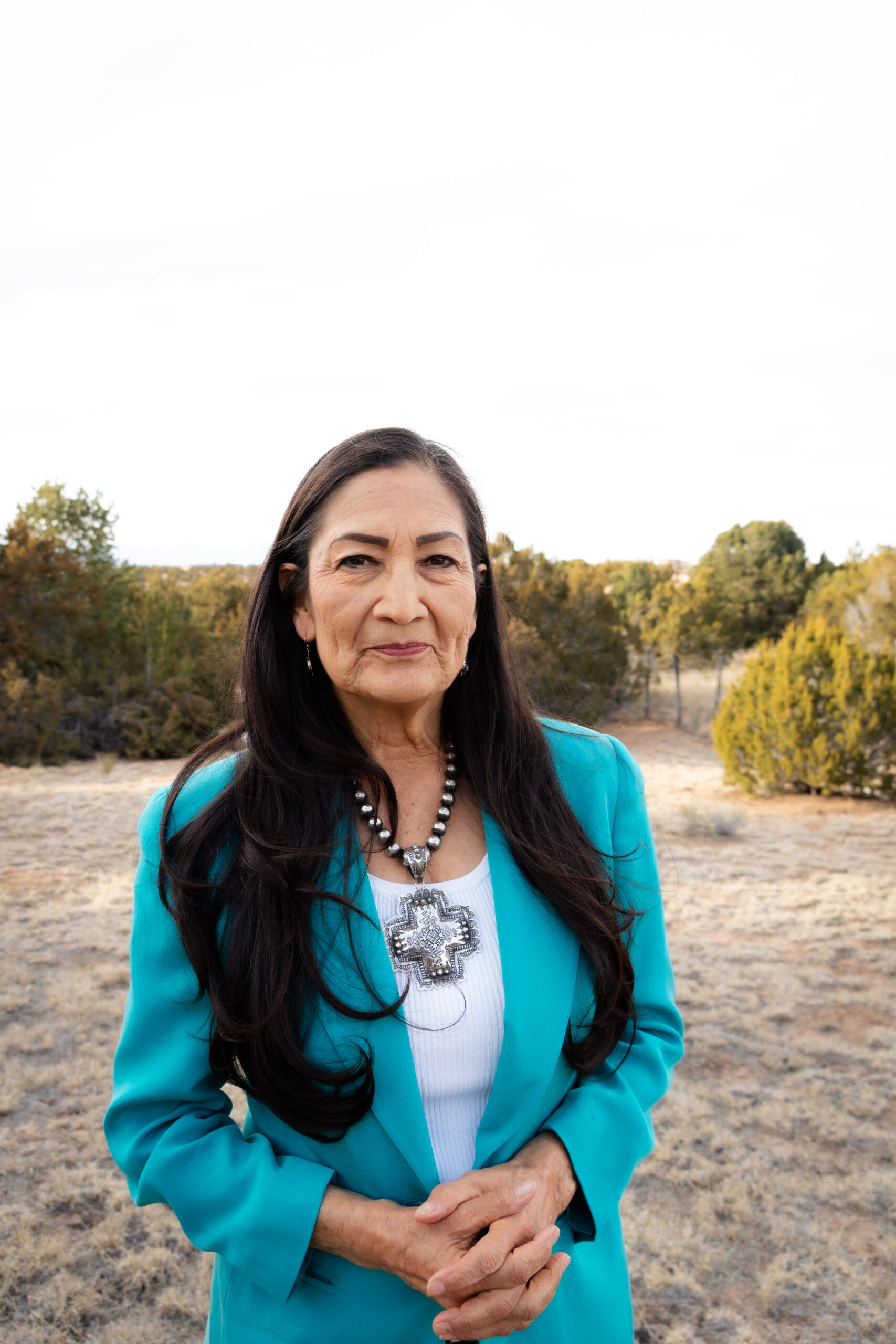
Deb Haaland

Yes. New Mexicans should control their own personal information, and consent should be affirmative, plain-language, and understandable for teenagers, adults, and seniors alike.

Yes. New Mexicans should control their own personal information, and consent should be affirmative, plain-language, and understandable for teenagers, adults, and seniors alike. My healthcare plan calls for rigorous protections for reproductive-health, gender-affirming-care, and immigration-status records, passage of a Healthcare Info Privacy Protections Act, and a ban on digital geofencing around healthcare facilities. As Governor, I would apply that same principle more broadly: companies should not be allowed to collect, sell, or share sensitive personal information without clear, meaningful permission.

Deb Haaland

Gregg Hull

Did Not Answer


Did Not Answer

Icon of a person.

New Mexico has seen a massive expansion of surveillance technologies — including facial recognition systems that produce false matches at disproportionate rates for people of color and raise serious concerns about warrantless surveillance and Fourth Amendment protections. While the state recently enacted initial guardrails for Automated License Plate Readers, most technologies remain unregulated. Will you support policies that will create smart, enforceable guardrails to prevent the misuse or weaponization of these tools and protect the privacy of all New Mexicans? 

Deb Haaland

Yes. New Mexico needs clear, enforceable guardrails for surveillance technology.

Yes. New Mexico needs clear, enforceable guardrails for surveillance technology. In Congress, I cosponsored the George Floyd Justice in Policing Act, which would have barred facial-recognition technology on certain police body cameras and patrol-car cameras, restricted no-knock warrants, and addressed privacy and constitutional concerns tied to those systems. As Secretary of the Interior, I oversaw policing reforms that required body-worn cameras,, and advanced more transparent and accountable law-enforcement practices. My current healthcare plan also calls for banning digital geofencing around healthcare facilities. As Governor, I would support rules that protect constitutional rights, prevent discriminatory abuse, and ensure strong transparency, oversight, and accountability for surveillance tools.

Deb Haaland

Gregg Hull

Did not answer.


Did not answer.

Icon of a person.

The New Mexico Civil Rights Act marks its fifth anniversary this year — a landmark law that created real accountability for civil rights violations. As the federal government dismantles due process protections, guts accountability mechanisms, and attacks constitutional rights, will you vote to protect and strengthen the NMCRA as a critical safeguard for all New Mexicans?

Deb Haaland

Yes. I will protect and strengthen the New Mexico Civil Rights Act because it gives people a state-court remedy when their rights are violated and holds the government accountable.

Yes. I will protect and strengthen the New Mexico Civil Rights Act because it gives people a state-court remedy when their rights are violated and holds the government accountable. Throughout my career, I have worked to expand and defend civil rights. During law school, I noticed that the jury box in Laguna was used only for storage, so I took action and helped reinvigorate the jury-trial system in my community. In Congress, I cosponsored the Equality Act and the Voting Rights Advancement Act; added jurisdictional protections for survivors of domestic violence to VAWA; led the Not Invisible Act to spur action on the crisis of missing and murdered Indigenous people; and worked to protect transgender troops in the military. As Secretary of the Interior, I created the Missing and Murdered Unit, advanced body-camera and law-enforcement transparency reforms, and uplifted stories of injustice so we could push for more equitable policies across the board. As governor, my public-safety plan supports barring officers who commit serious misconduct from returning to law enforcement and strengthening transparency and accountability. Protecting civil rights and public safety go hand in hand, and I’m committed to defending civil rights in the face of federal overreach.

Deb Haaland

Gregg Hull

Did not answer.


Did not answer.

Icon of a person.

The "tough on crime" policies of the 1990s failed our communities — and we are still living with the consequences. Do you agree with most New Mexicans that investing in diversion programs, after-school activities, behavioral health, and youth employment is a smarter, more sustainable path to community safety than increasing sentences or charging children as adults and that these policies should be prioritized in the NM State Budget?

Deb Haaland

Yes. We cannot arrest our way out of our crime problems. Many would make us believe that juvenile offenders are beyond help, but when I see a child who has committed a crime, I see a system that has failed a child.

Yes. We cannot arrest our way out of our crime problems. Many would make us believe that juvenile offenders are beyond help, but when I see a child who has committed a crime, I see a system that has failed a child. As Governor, I will prioritize a Youth Opportunity and Safety Initiative that invests in early intervention, a uniform statewide standard for diversion, after-school mentorship, paid internship programs, school attendance support, substance-use services, and behavioral health access. I will also invest in community support systems by expanding youth engagement on weekends and during school breaks and building stronger partnerships with local businesses and nonprofits. And I will provide stronger funding for violence intervention programs, including hiring professionals in high-risk communities to address root causes and better prevent violence from occurring in the first place. That is the smarter, safer, and more sustainable way to reduce youth violence and help young people build better futures.

Deb Haaland

Gregg Hull

Did not answer.


Did not answer.

Icon of a person.

The Trump administration is moving to expand detention of people simply for being unhoused, living with mental illness, or struggling with addiction — doubling down on the same failed approaches that have cost taxpayers billions without making our communities safer. Do you agree with most New Mexicans that investing in treatment, stable housing, and mental health supports are more effective and more just responses than incarceration? Will you prioritize policies that support those interventions?

Deb Haaland

Yes. Treatment, stable housing, and supportive communities are more effective than criminalizing poverty, illness, or substance use disorder.

Yes. Treatment, stable housing, and supportive communities are more effective than criminalizing poverty, illness, or substance use disorder. My public-safety plan reinforces my belief that true safety cannot be built on enforcement alone. It calls for an Office of Community Safety to coordinate social workers and behavioral-health professionals; emphasizes treatment and recovery rather than incarceration; and explicitly backs a Housing First approach to homelessness. I would prioritize outpatient care, mobile clinics, crisis response, and diversion so people get help before they are pushed deeper into crisis or the criminal legal system.

Deb Haaland

Gregg Hull

Did not answer.


Did not answer.

Icon of a person.