
Billboards Celebrate NM Civil Rights Act Fifth Anniversary
July 1, 2026 9:00 am
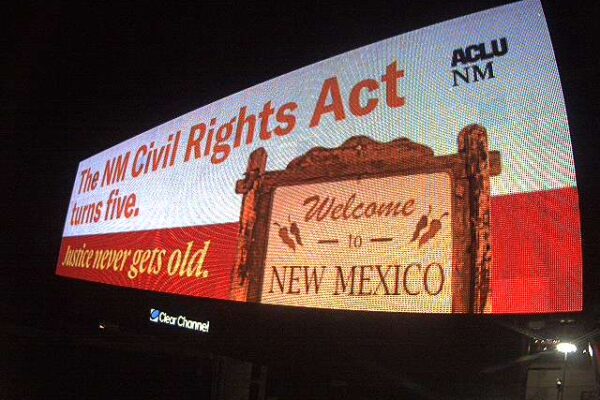
ALBUQUERQUE, N.M. – To commemorate the five-year anniversary of the New Mexico Civil Rights Act (NMCRA), the American Civil Liberties Union (ACLU) of New Mexico has placed five billboards praising the landmark law across Albuquerque. They can be found on Paseo del Norte Blvd east of Edith, on I-40 off Twelfth St NW and west of Carlisle Blvd and on I-25 off Coal Ave and San Mateo Blvd. The billboards began running on June 29 and will end on July 5.
“When our state passed the New Mexico Civil Rights Act, we declared that the rights guaranteed by the New Mexico Constitution meant something,” said Leon Howard, executive director of the ACLU of New Mexico. “We said that when people in positions of power violate those rights, New Mexicans deserve a meaningful way to hold those people accountable. Given the federal rollback of civil rights and liberties, these last five years have proven that this piece of legislation has been substantial in safeguarding the rights of New Mexicans and enforcing the protections promised to everyone in our state.”
Before the NMCRA, people with legitimate civil rights cases were forced into federal court, where qualified immunity often shut the courthouse doors before a victim ever had a real chance to be heard. Since the passage of the NMCRA, New Mexicans finally have a fair chance to hold public institutions accountable when they bring claims to state court. When any public actor, such as police officers, jail officials, school officials, etc. violate rights protected by the New Mexico Bill of Rights, New Mexicans have a fighting chance at receiving justice.
“We have watched the U.S. Supreme Court erode well-settled rights one by one. We continue to see attacks on equal protection, due process, free speech, bodily autonomy, voting rights, and the basic idea that the government must be accountable to the people it serves,” said Howard. “New Mexico cannot control every decision coming out of Washington, D.C. But we can control what we do in our own state.”
The act first went into effect on July 1, 2021.
Stay Informed
Sign up to be the first to hear about how to take action.
By completing this form, I agree to receive occasional emails per the terms of the ACLU’s privacy statement.
By completing this form, I agree to receive occasional emails per the terms of the ACLU’s privacy statement.